
JULY 18-19
at Point Park University
Students 8-12 Grade
Registration Deadline: May 15th, 2026
Collaborate In-Person with NASA Experts

-
Dr. Jim Green is a physicist and former Chief Scientist at NASA, where he served as the agency’s principal advisor on science programs and strategy. Over a 42-year career at NASA, he held numerous leadership roles, including Director of the Planetary Science Division, overseeing major missions such as New Horizons to Pluto, Juno to Jupiter, and the Curiosity rover landing on Mars. Dr. Green earned his Ph.D. in physics from the University of Iowa and has authored more than 125 scientific papers. He retired from NASA in 2022 and continues to advocate for planetary science, exploration, and public engagement in space.

-
Dr. Ray Wheeler is a retired Senior Scientist and plant physiologist at NASA’s Kennedy Space Center. During his 36-year career with NASA, he led pioneering research on growing plants in space and developing biological life-support systems for long-duration missions. His work focused on controlled environments that produce food and oxygen, recycle water, and remove carbon dioxide—technologies critical for future missions to the Moon and Mars. Dr. Wheeler has authored hundreds of scientific publications and received multiple honors, including NASA’s Exceptional Scientific Achievement Medal.

-
Jim Adams is an aerospace engineer and former Deputy Chief Technologist at NASA, where he helped oversee the agency’s space technology programs and investments. During his career, he also served as Deputy Director of NASA’s Planetary Science Division, managing the budget, schedule, and performance of major planetary exploration missions. Adams has more than 30 years of experience in aerospace engineering and program management and has contributed to the development and operation of over two dozen spacecraft missions.
-
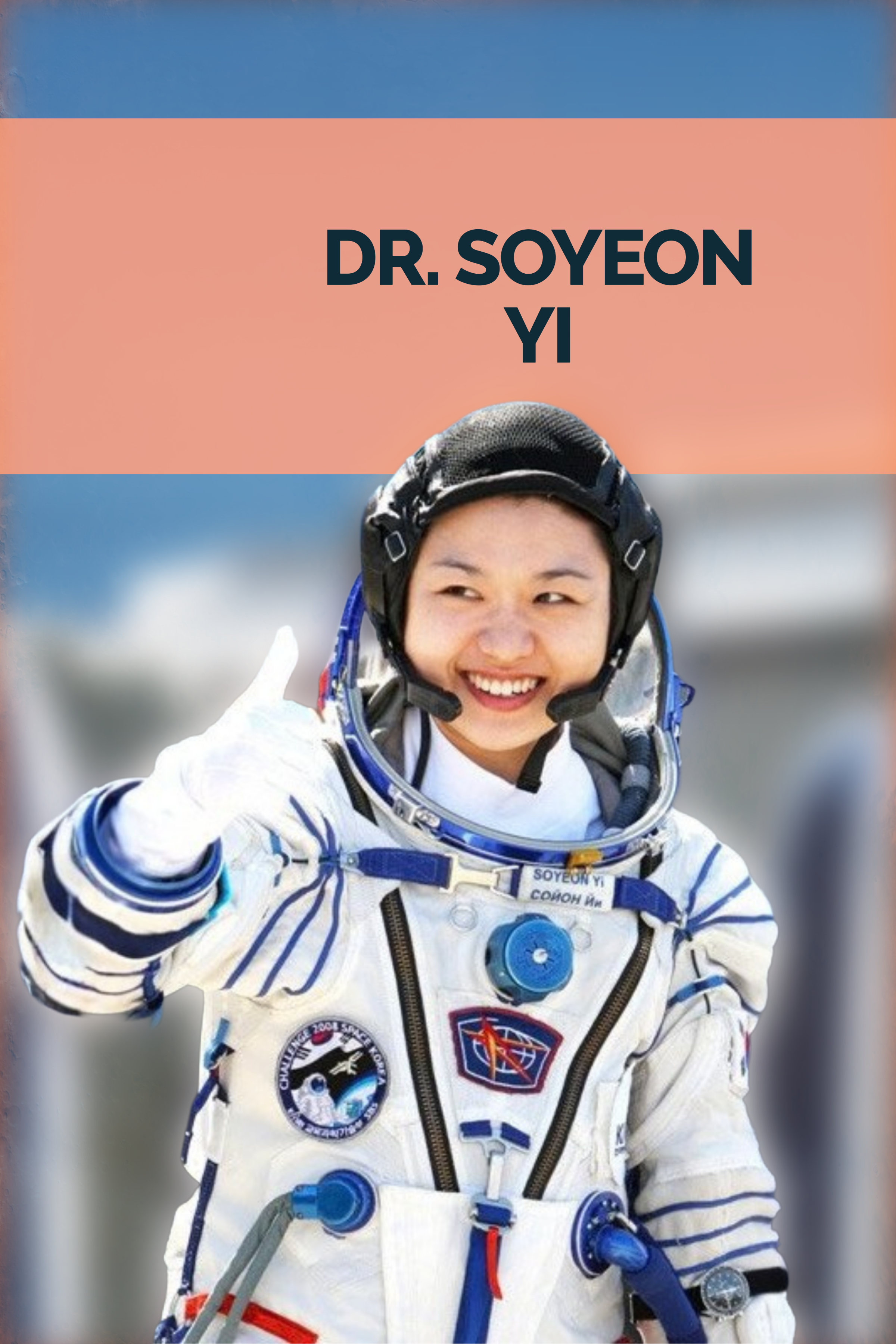
Soyeon Yi is a South Korean astronaut and the first Korean citizen to travel to space. In April 2008 she launched aboard Soyuz TMA-12 to the International Space Station, where she conducted scientific experiments during a nine-day mission. Yi holds degrees in mechanical engineering from the Korea Advanced Institute of Science and Technology (KAIST) and was selected from more than 36,000 applicants for Korea’s astronaut program. After leaving Korea’s space program in 2014, she has remained active in science outreach and international space initiatives.
Work Together to Solve Real NASA Gap Analysis Challenges

-
Future missions to the Moon and Mars will rely heavily on robotics to build infrastructure, explore terrain, and assist astronauts. Students will explore ideas for robotic systems that can operate in harsh planetary environments with minimal human intervention.

-
Long-duration missions will require astronauts to grow food in controlled environments far from Earth. Participants will explore innovative ideas for growing crops, managing resources, and creating sustainable food systems for lunar or Martian habitats.

-
Living on another planet presents unique psychological, social, and cultural challenges. Students will explore ideas related to human well-being, teamwork, communication, and community during long-duration missions.
Experience Includes
Team-based exploration of Moon to Mars mission challenges
Direct engagement with space experts actively working in the field
Guided discussions informed by real mission experience
Opportunities to present ideas and receive expert feedback
Exposure to how large-scale space missions are planned and executed
Additional Information
-
Point Park University; specific building locations to be finalized
-
Friday Evening (Optional Kickoff Gathering)
Informal check-in and welcome for early arrivals.
Meet fellow participants, mentors, and organizers in a relaxed get-to-know-each-other gathering.
A great chance to start forming connections, share ideas, and build excitement for the weekend ahead.
Optional event — come by, say hello, and get a head start on the hackathon experience!
Saturday (8:00 AM – 5:00 PM)
Kick off the weekend with breakfast and introductions to fellow participants and mentors.
Hear from space industry experts about the real challenges facing the future of Moon and Mars exploration.
Form teams and start brainstorming innovative ideas to tackle these real-world space challenges.
Work alongside mentors to develop concepts and early solutions.
Lunch provided to keep the ideas flowing.
Saturday Evening Special Event
Travel to the Allegheny Observatory for a unique space experience.
Special presentation by Dr. Jim Green: “The Search for Life on Mars.”
Behind-the-scenes tours of the historic observatory.
Night sky viewing through the observatory’s historic telescopes.
Sunday (8:00 AM – 5:00 PM)
Start the day with breakfast and team collaboration.
Continue working with mentors to refine your team’s space solution.
Create a poster presentation showcasing your team’s concept.
Lunch provided.
Sunday Evening – Launch Party (7:00 PM)
Public poster session where teams present their ideas.
NASA panel discussion with insights into the future of space exploration.
Awards celebration recognizing creativity, teamwork, and innovation.
-
Students currently in 8th grade to 12th grade, even graduating seniors can participate.
Must attend both days of the Hackathon, limited time absences are allowed if preapproved, but participation both days is required.
Registration Dealine: May 15th, 2026
-
2-day program
$200 - $50 per student
We recognize not all families' finances are the same. We ask you to pay what you can.
Registration Deadline: May 15th, 2026
-
A block of hotel rooms are being arranged.
Check back for details or send a message to m2m.hackathon@moon2marsfoundation.org and we will be in touch once finalized.
-
Email m2m.hackathon@moon2marsfoundation.org
Registration Deadline: May 15th, 2026